.
Home » The Molecular Powerhouse: Why Serums are the Precision Tool for Difficult Skin

At Junita® Lab, we believe in radical transparency. To help you navigate your skin health, we must be honest about the role of the serum.
I. In Plain English: What is a Serum?
If you are new to skincare, the various steps can feel overwhelming. To simplify it, think of your routine like a high-performance car:
In simple terms, a serum is a lightweight liquid or light cream that contains the highest concentration of “active” ingredients in your entire cabinet. While a cream is made of large molecules to stay on the surface, a serum is made of tiny molecules designed to sink deep into the skin to solve specific problems like wrinkles, redness, or breakouts.
II. The Junita® Transparency Statement
“If you have perfectly balanced, healthy skin and use a high-quality moisturiser, a serum is often an ‘extra’. However, for difficult, reactive, or sensitive skin, a serum becomes a necessity. Why? Because these skin types have specific ‘deficits’—such as a lack of ceramides, chronic inflammation, or slow cell turnover—that a standard cream cannot fix alone. A serum is the targeted ‘medicine’ in your routine, while the cream is the protective ‘bandage’.“
III. The Molecular Difference: Why Your Moisturiser Isn’t Enough
To understand why you need a serum, you must understand molecular weight.
A standard moisturiser is formulated with larger molecules and occlusive agents (waxes and heavy oils). Its job is to sit on the surface, acting as a physical shield. In contrast, a serum is formulated with very small molecules. This allows it to bypass the surface tension of the skin and penetrate deeper into the epidermis.
IV. Fact-Checking: Who Should Use a Serum?
| Condition | Verdict | The Scientific Reason |
| Aging / Mature | Essential | Addresses the “renewal deficit” by delivering high-potency peptides directly to the living layers of the skin. |
| Acne-Prone | Essential | Delivers oil-soluble actives deep into the pore “plug” where inflammation starts. |
| Rosacea | Supportive | Strengthens weak capillary walls and lowers the “heat” in the skin. |
| Sensitive | Vital | The fastest way to stop the “stinging” cycle by reintroducing essential lipids directly to the cells. |
V. Why the “Light Cream” Form Wins (Stability Over Aesthetics)
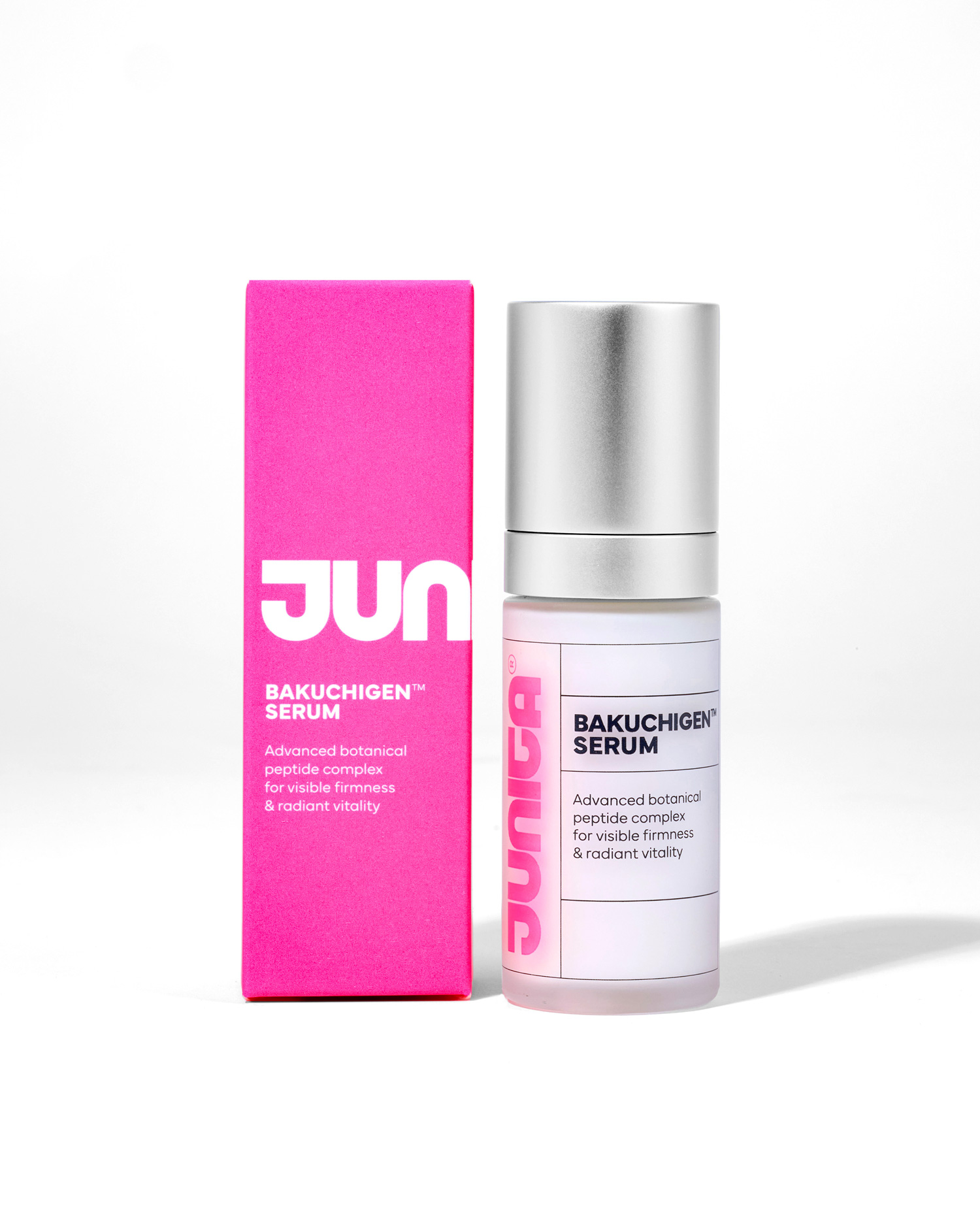
At Junita® Lab, we intentionally moved away from the traditional “dropper” format for our Bakuchigen™ Serum. We formulated it as a light, silky emulsion (light cream). The Scientific Advantage:
VI. The Authority View: The Dutch Context
According to the Nederlandse Vereniging voor Dermatologie en Venereologie (NVDV), maintaining the skin’s barrier integrity is the first line of defence against disease. In the windy, hard-water environment of the Netherlands, skin suffers from “micro-cracks.” While a cream protects these cracks, only a serum—rich in concentrated humectants—can fill them at a cellular level.
Conclusion: Beyond Marketing to Results
Is a serum an unnecessary product? For those seeking true stability in their skin—especially as we age or face reactivity—the answer is a resounding no.
By choosing formulations that respect the barrier while delivering high-potency actives—such as those found in our Bakuchigen™ Serum—you are no longer just “washing your face.” You are performing a dermal intervention.
Subscribe now to keep reading and get access to the full archive.