For those with difficult skin, the journey to stability is rarely a straight line. Often, just as we feel we have mastered our routine, our internal environment shifts. Hormones are the silent architects of our skin’s health; they influence everything from oil production and collagen density to how quickly we heal from an "attack."
Understanding this internal compass is essential for the Junita® Lab community. It allows us to move from a state of frustration to a state of informed care.
I. The Scientific Link: Why Your Skin Reacts
Your skin is not just a covering; it is a complex, hormonal organ. It contains receptors that are specifically “tuned” to the chemicals circulating in your blood.
- The Stress Signal (Cortisol): When you are under pressure—be it from work, lack of sleep, or emotional strain—your adrenal glands release cortisol. In the skin, cortisol acts as a “degrader.” It breaks down the Hyaluronic Acid and Collagen that keep your barrier plump, and it signals your sebaceous glands to produce thicker, more inflammatory oil.
- The Cycle of Change (Oestrogen & Progesterone): For many, the monthly cycle dictates skin behaviour. Oestrogen is the “hydration” hormone; when it dips (right before your period or during menopause), the barrier becomes physically thinner and more prone to irritation. Progesterone, the “oil” hormone, can lead to the congestion often seen on the chin and jawline.
- The Androgen Flare (Hormonal Acne): Beyond the monthly cycle, a sensitivity to Androgens can trigger a specific type of distress. These hormones signal the skin to produce excess sebum that is “thicker” and stickier than usual. When this oil mixes with dead skin cells, it creates a plug deep within the pore. Because the inflammation starts so deep, it often results in painful, cystic bumps rather than simple whiteheads.
- The Menopause Transition: As oestrogen levels permanently shift, the skin can lose up to 30% of its collagen in the first five years. This makes the skin feel suddenly “difficult,” dry, and sensitive to products that used to work perfectly.
II. The “Check-In”: When to Question the Why
We encourage our customers to become “skin detectives.” Instead of reacting with more harsh products when a flare-up occurs, pause and check in with your well-being.
- Check the Map: Is the reaction concentrated on the lower third of your face? Hormonal acne specifically loves the “U-zone”—the jawline, chin, and neck. These areas have a higher density of hormone receptors in the oil glands.
- Check the Texture: Hormonal acne is often “blind” (meaning it has no head) and feels tender or throbbing under the surface. If you feel a “bump” before you see it, your hormones are likely sending a signal.
- Check the Calendar: Does this happen during your “luteal phase” (the week before a period)? Or perhaps during a peak “High-Wire” stress week at work?
- Check the “Battery”: How is your sleep? How is your digestion? Your skin is often the “canary in the coal mine,” alerting you that your internal systems are overwhelmed.
Important Note: If your skin changes are sudden, severe, or accompanied by other systemic symptoms (like hair thinning or extreme fatigue), it is vital to consult your Healthcare Professional or GP. While we can support the skin, underlying hormonal conditions require medical guidance tailored to your healthcare system.
III. Calming the Attack: The Holistic & Junita® Approach
When your hormones go “haywire,” your skin feels like it is under attack. The Junita® Lab philosophy is to support, not struggle.
- Stabilise the pH with ABC Hydrobalance™ Toner
Hormonal shifts and excess androgenic oil often disrupt the skin’s “acid mantle.” When your pH is off, “bad” bacteria flourish inside those clogged pores. Using the ABC Hydrobalance™ Toner is your first line of defence. Its mild exfoliating acids help keep the “pore plug” soft while bringing your skin back to its stable pH of 5.5.
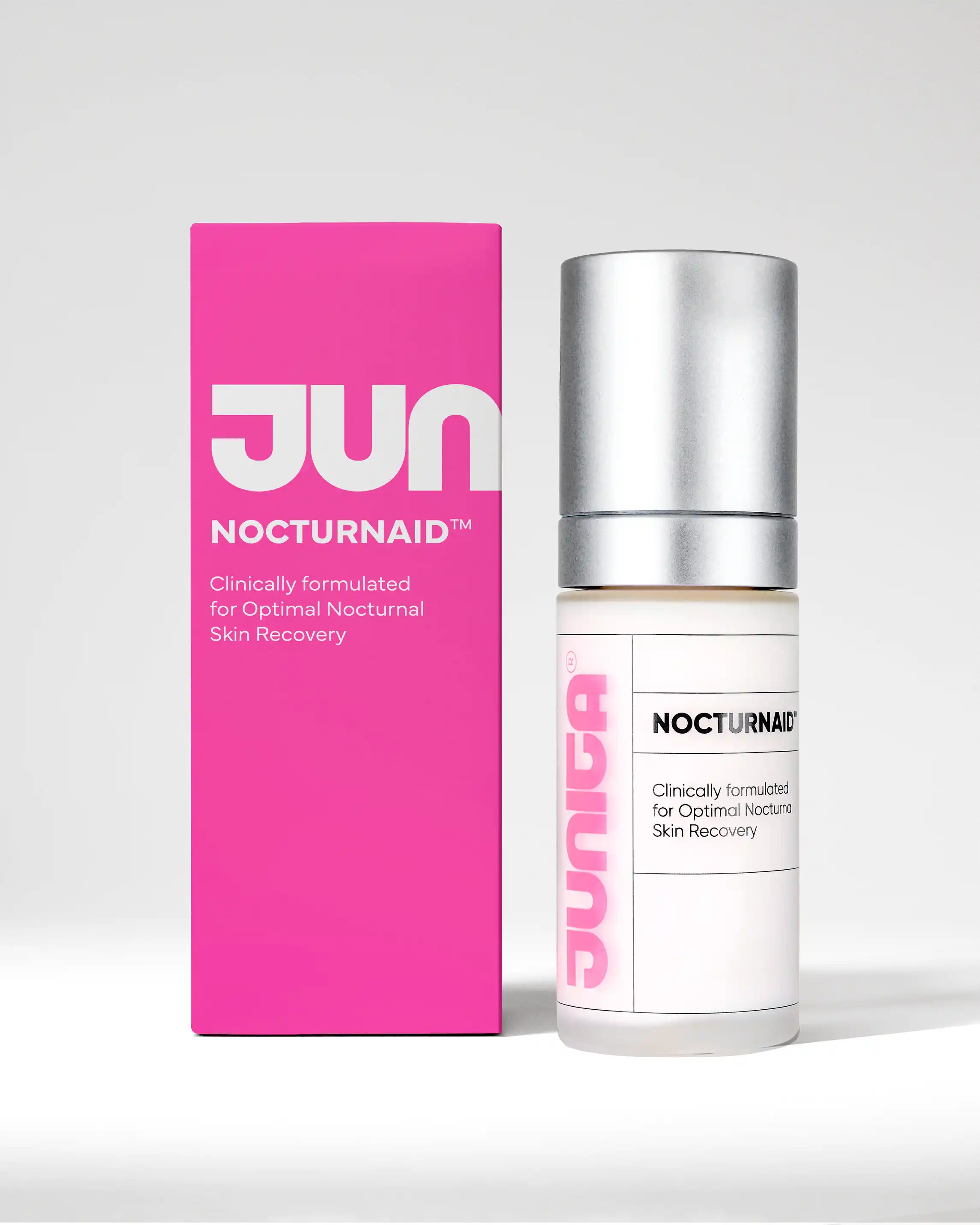
- Rebuild with Ceramides (Nocturnaid™ Night Cream)
When cortisol breaks down your natural lipids, you must replace them. Even if your skin feels “oily” due to hormonal acne, it is likely dehydrated and inflamed underneath. The Ceramides in our Nocturnaid™ Night Cream act as the “seal,” preventing further water loss and calming the inflammatory signals that make hormonal spots so painful.
- The “One-Product” Rule
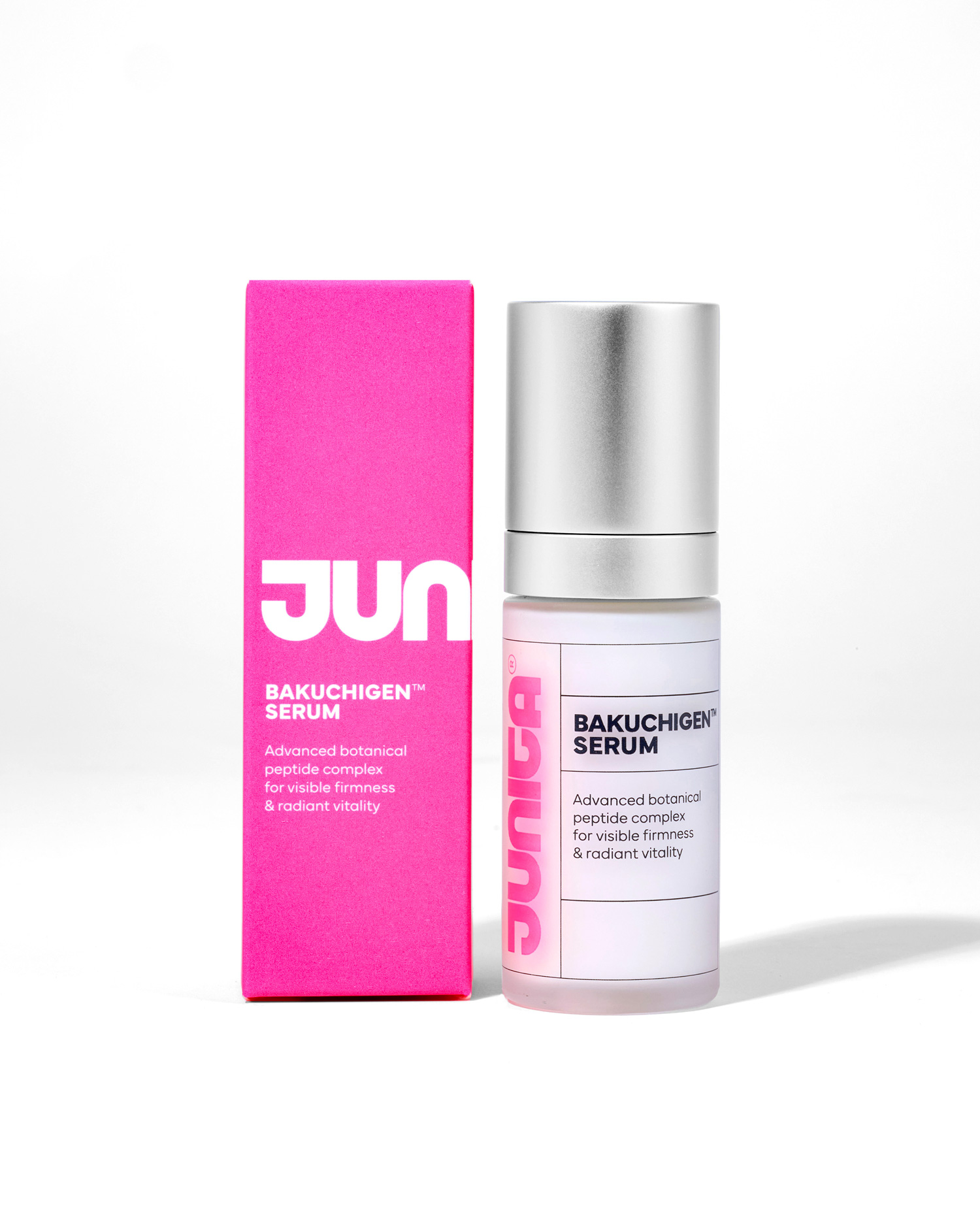
If your skin is in an active hormonal flare-up, do not introduce new actives. Strip back to the basics: Cleanse, Tone, and Protect. Let the inflammation subside before reintroducing the Bakuchigen™ Serum.
- Wellbeing: Lower the Heat
- Temperature: If hormones (like hot flushes or inflammatory acne) make your skin feel “hot,” use cool (not cold) water and avoid steam.
- The 4-7-8 Breath: To lower cortisol, inhale for 4 seconds, hold for 7, and exhale slowly for 8. This is a “biological reset” for your nervous system.
IV. Conclusion: Accepting the Wabi-Sabi of the Body
Our bodies are dynamic, not static. There will be weeks when your skin feels resilient and weeks when it feels fragile. By understanding the hormonal “why”—and recognizing that hormonal acne is an internal signal, not a surface flaw—we can treat our skin with the empathy it deserves.
Adapting your Junita® Lab routine to these internal seasons is the ultimate form of self-care. It is about persistence, not perfection.